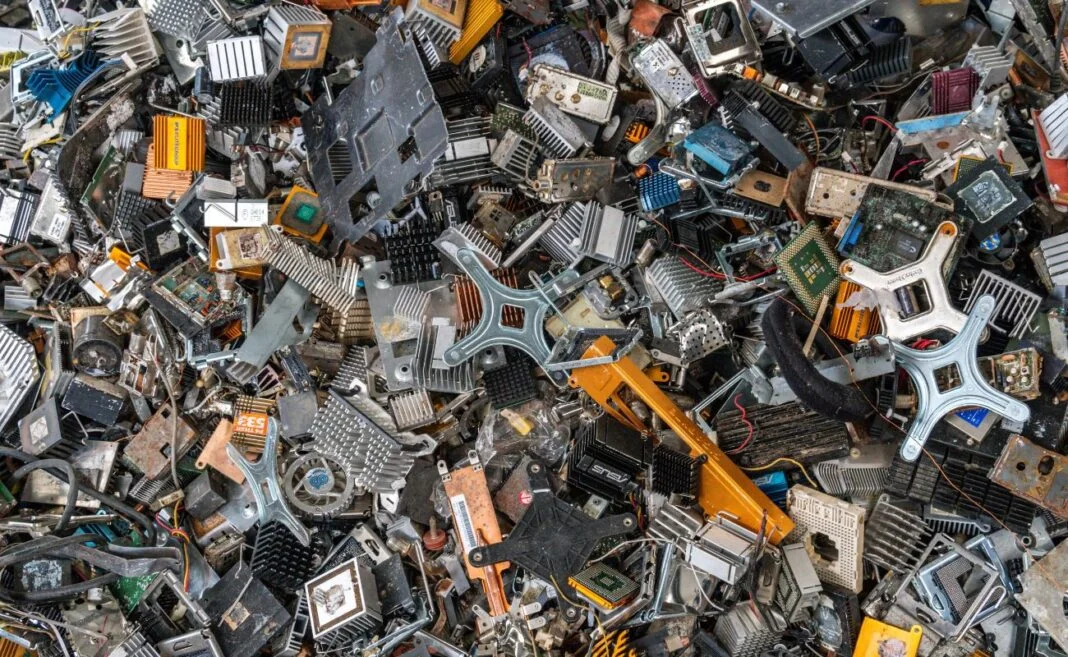

Approximately 10.7 million tonnes of WEEE in 2022. That’s how much Waste Electrical and Electronic Equipment European citizens and businesses in the EU27+4 (European Union plus Iceland, Norway, Switzerland, and the United Kingdom) discarded — about 20 kg per person on average.
At this point, we only see the problem. But taking a step further, we can also glimpse the solution: the contribution these wastes can make to increase the autonomy of European industry, reducing dependence on foreign supplies of raw materials, particularly critical and strategic ones essential for the green and digital transitions.
This step forward is made possible by the analyses, estimates, and projections conducted for the European FutuRaM project, funded by the Horizon program. These analyses show that within this WEEE there were approximately 1 million tonnes (Mt) of 29 different critical raw materials. This is the figure that transforms mobile phones, computers, screens, washing machines, refrigerators, small household appliances, and photovoltaic panels from an environmental problem into a potential industrial resource.
According to Giulia Iattoni, Assistant Programme Officer at the United Nations Institute for Training and Research (UNITAR), one of the project partners, “in the FutuRaM project we have collected and harmonised observed data from official sources, such as Eurostat, national reports, scientific literature, and industrial data, integrating them with mathematical models to fill the information gap. The observed data describe the current state of WEEE flows and their content of critical raw materials.”
In European WEEE, there is copper in cables, aluminium in casings, rare earth elements in magnets and fluorescent powders, and platinum-group metals in electronic boards and displays. These are not marginal materials. They are inputs essential for chemistry, metallurgy, electronics, engines, energy systems, photovoltaics, electric mobility, and more generally, the green and digital transition. These are materials that European industry needs and that it currently seeks outside its own borders.
Read also the Special report FutuRaM
The Gap Between Content and Recycling
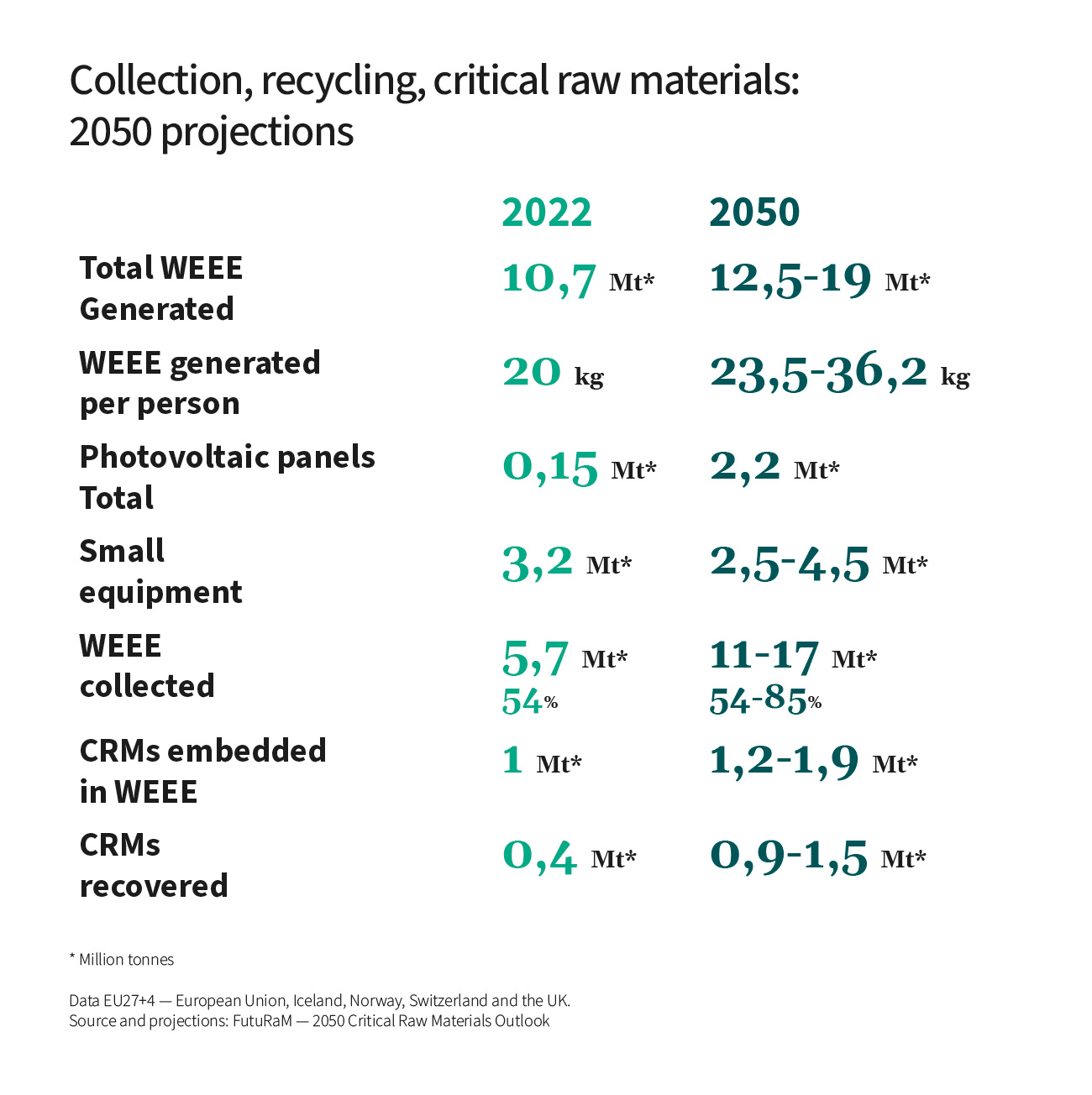
A key aspect highlighted by the FutuRaM project is that “containing” does not automatically imply the ability to “recycle” Of the 10.7 million tonnes of WEEE, only 5.7 million tonnes (54%) were collected and sent for proper treatment. This made approximately 0.4 million tonnes of critical raw materials available for recycling—for example: 208 kt of aluminium, 162 kt of copper, 12 kt of silicon, 1 kt of tungsten, and 2 tonnes of palladium.
The remainder is lost for various reasons: failure to intercept, failure to identify materials, failure to disassemble, or technical limitations of recycling technologies.
“Not all the material present in products is actually recoverable,” clarifies Iattoni, “because the availability as a secondary resource is influenced by several factors: some of it is not intercepted by collection systems, while some, although collected, is not technically or economically accessible with current recycling technologies, due to low concentrations or the complexity of components. A significant portion of WEEE in Europe does not enter formal collection channels compliant with the WEEE Directive, which reduces the potential for recovering the critical raw materials contained within.”
WEEE and Critical Raw Materials: The Trend
Looking to the future, the volume of WEEE is expected to increase. However, if collection and recycling are properly implemented, This will represent an opportunity rather than an issue to address (for completeness, this also touches on the trade-off between environmental priorities, which encourage extending product lifespans, and industrial and strategic priorities, which require materials to be recycled).
Studies prepared for the FutuRaM project (for example, the 2050 Critical Raw Materials Outlook) estimate that in the EU27+4 area, electronic waste could increase from 10.7 Mt in 2022 to a range of 12.5–19 Mt by 2050. Photovoltaic panels are the category with the most pronounced growth: from 0.15 Mt in 2022 to 2.0–2.2 Mt in 2050. At the same time, the amount of critical raw materials contained in these future wastes is also expected to rise: up to 1.2–1.9 Mt.
Iattoni further clarifies: “The modelling estimates reconstruct or complete missing information through coherent assumptions, weighted estimates, and mass balances, when possible later validated by industry experts. The future scenarios developed in FutuRaM (business-as-usual, recovery, and circularity) are not forecasts, but represent possible developments up to 2050 based on changes in collection systems, recycling technologies, and market dynamics, allowing an assessment of how these conditions influence the availability and recovery of critical raw materials from WEEE and the achievement of the targets.”
Read also: Iattoni (UNITAR): “Invest in data quality to guide decisions for recovery of critical raw materials”
Investing in the Quantity and Quality of Recycling
According to another report, Future Trends of Secondary Raw Materials and Critical Raw Materials, with appropriate recycling technologies, electrical and electronic waste could become a significant secondary source. Today, recovery mainly focuses on precious metals, copper, iron, and aluminium, but in the future, it could extend to other key elements through the disassembly of components rich in critical raw materials.
“FutuRaM clearly shows that collecting more is not enough, because quantity without quality does not lead to efficient recovery of critical materials,” explains Giorgio Arienti, Director General of Erion WEEE, Italy’s producer responsibility system for WEEE. “Collecting more is certainly important, but at the same time it is crucial to collect better: selecting streams, separating materials, and reducing contamination. In practice, batteries, printed circuit boards (PCBs), and electronic boards must be treated separately to maximize recoverable value.”
Reducing Dependence
The ways we can use these valuable materials help us understand what’s at stake. Copper is used in cables, inductors, compressors, and electronic boards. Aluminium is used for casings and structural components. Palladium is used in electronic boards, hard drives, and LCD and plasma displays. Rare earth elements, such as neodymium, are critical for magnets; others, like yttrium and europium, are used in specific electronics and lighting applications, especially in phosphors or fluorescent powders in lamps and displays.
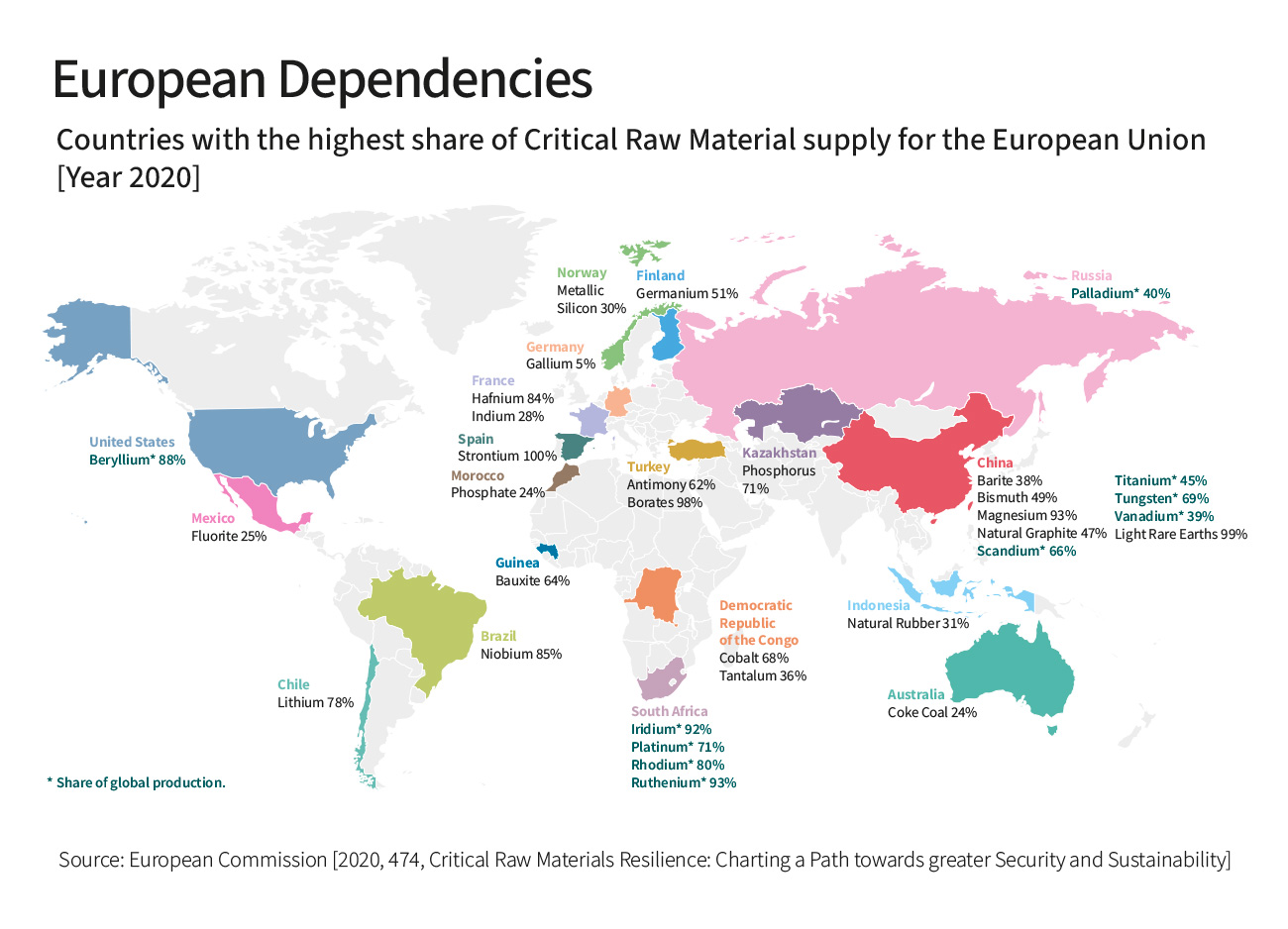
However, the strategic value — the real significance of this analysis — can probably only be appreciated when considered in the context of global trade flows, and when compared to the amounts of these materials present in WEEE — copper, aluminium, silicon, tungsten, palladium, and rare earths — that European industry seeks and purchases from outside its borders.
According to the CRIET (Interuniversity Research Centre on Territorial Economics) and Istat, the value of Italy’s imports of critical raw materials in 2023 was €1.4 billion.
“The negative balance of the trade in critical raw materials provides an initial, and quite evident, indication of Italy’s vulnerability on this issue, highlighting its strong dependence on other countries for this type of supply,” the authors write.
These numbers clearly explain why WEEE can no longer be viewed simply as a waste management problem. In many cases, the materials they contain coincide with those imported from a few—and not always geopolitically reliable—external suppliers. The “urban mine” often discussed does not eliminate dependence, but it can help reduce it, thereby increasing the competitiveness and resilience of continental industry.
Read also: Improving Flows to Recycle More: Where Critical Raw Materials Are Lost
© All rights reserved
Download the full FutuRaM Special as a PDF