


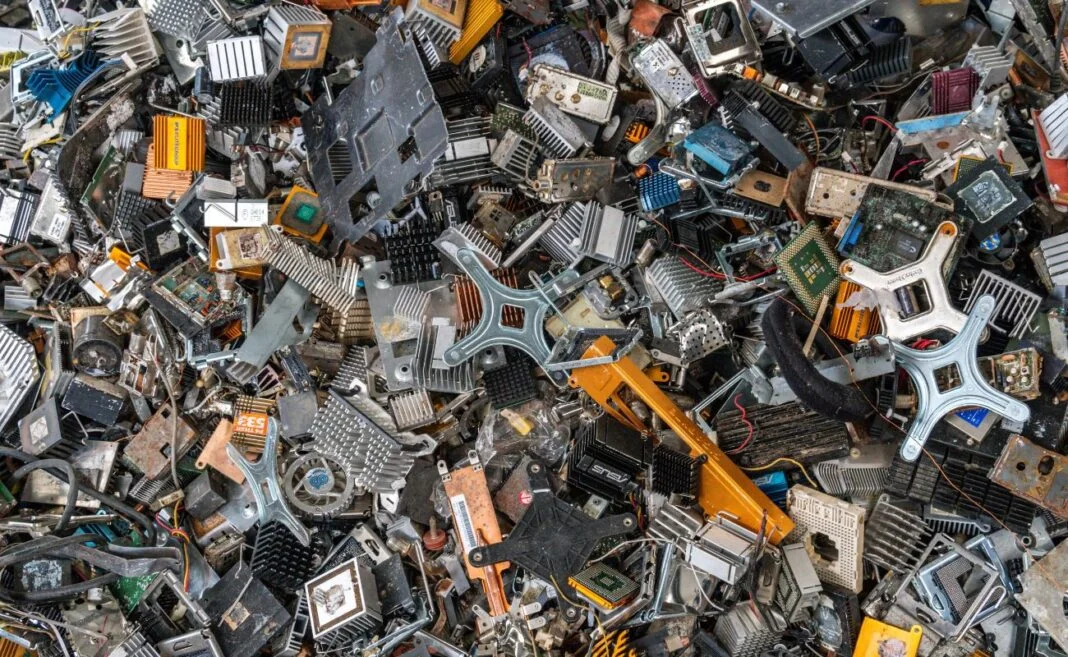
For Italy, the critical raw materials challenge is practically at kickoff. The tentative signs of improvement in collection are not enough to bring the country closer to European targets: according to the 2024 WEEE Management Report, prepared by the Italian WEEE Coordination Centre (CdC RAEE) to monitor household and professional WEEE sent for recycling and processed in facilities, the collection rate stands at 29.64%, against an EU target of 65% in force since 2019.
But unfortunately, this is not the only critical issue in the system. Giorgio Arienti, Director General of Erion WEEE, explains to EconomiaCircolare.com that even today, “in Italy, there is still a lack of complete and standardized data, advanced recycling infrastructure, and integrated industrial processes, which means that a large portion of the critical materials present in WEEE is either exported or lost, resulting in economic and technological losses.”
The game therefore begins in our drawers full of cables, appliances, and devices that need to be disposed of correctly, but it must necessarily continue by looking beyond collection—which certainly needs significant strengthening—to create a system capable of building national value chains that retain value.
Read also the Special report FutuRaM
An Industrial Value Chain Yet to Be Built
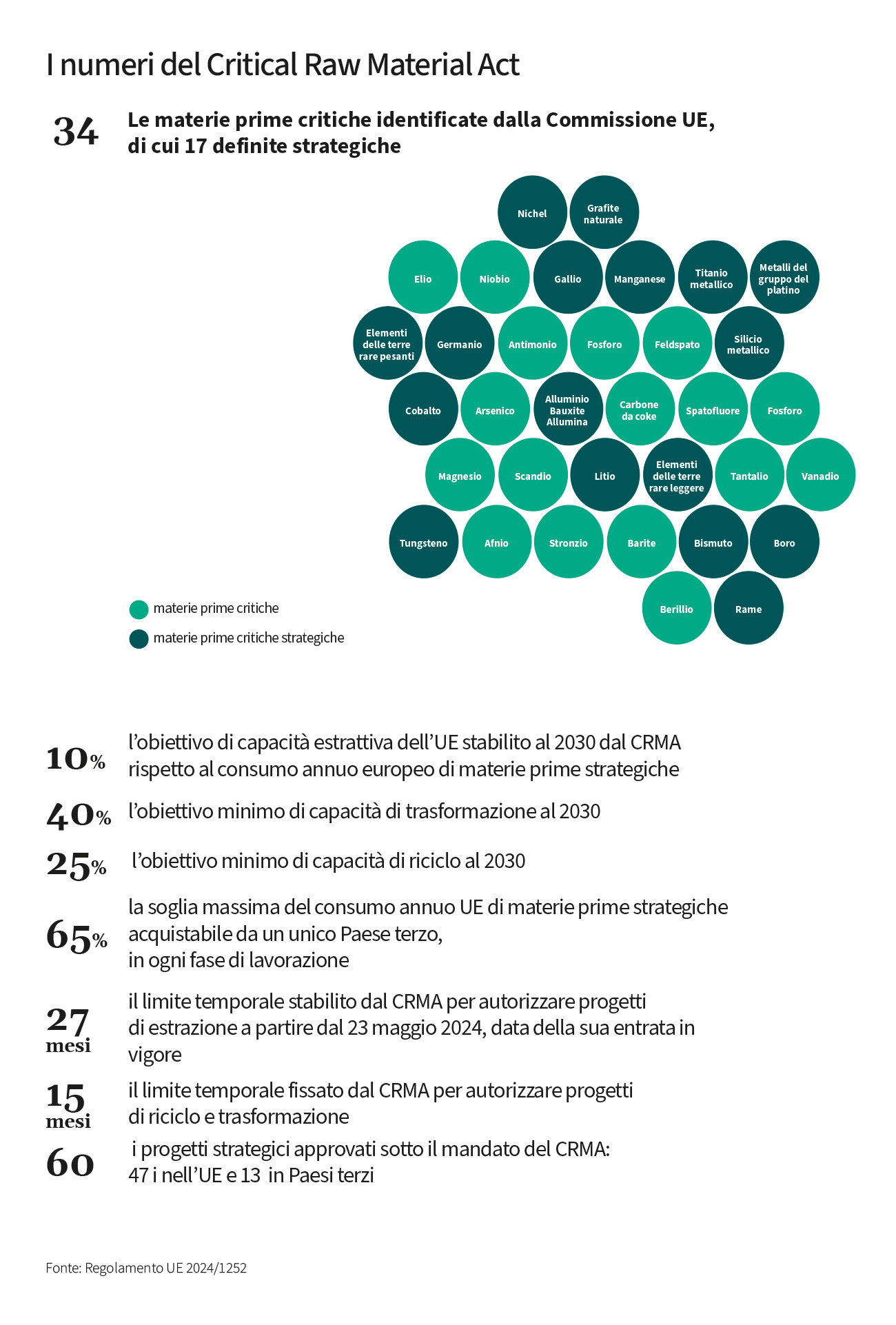
Fortunately, awareness is growing — for now more within civil society than in political action — that WEEE is no longer merely a waste stream to be properly managed, but a component of industrial policy. A policy that is yet to be built, and that must be based on planning grounded in data and projections, as FutuRaM, the Horizon Europe project dedicated to the future availability of secondary raw materials, attempts to do. Not all critical raw materials behave in the same way. Aluminum and copper, present in larger quantities and more consolidated fractions, are already recovered at a significant scale. Elements such as neodymium, dysprosium, palladium, or tungsten, however, require component identification, selective dismantling, dedicated technologies, outlet markets, and stable volumes. Projections for the growth of WEEE — particularly photovoltaic panels, but not limited to them — make a coordinated European-level strategy even more necessary, to identify, country by country, and therefore also in Italy, which flows should be treated and, ideally, reintegrated into the production system within European borders.
Saying “recycling” alone is therefore not enough. One must examine each individual electrical and electronic device once it becomes waste to understand its full potential in detail, while also ensuring there are sufficient materials to make the creation of processing facilities economically viable and to identify the industries interested in using them.
The System Can’t Run Without Stable Flows
The President of the CdC RAEE, Giuliano Maddalena, introducing the 2025 Annual Report, highlights that the system is well-established, but territorial differences “keep Italy far from the European targets for interception.” Indeed, the numbers for domestic WEEE collection tell a familiar story of highly uneven performance: the North reaches 192,952 tonnes and 7.02 kilograms per capita (kg/inhabitant), the Center 85,854 tonnes and 6.61 kg/inhabitant, while the South reaches 88,085 tonnes and 4.76 kg/inhabitant. Campania, with 2.95 kg/inhabitant, remains the national laggard.
Increasing collection means stabilizing waste flows. And without stable flows, the possibility of establishing advanced treatment facilities diminishes. Arienti clarifies that today many Italian plants are limited to separating high-value components, such as electronic boards and printed circuits, which are then exported to countries equipped with more advanced technologies. Italy, therefore, is still far from closing the loop. The greatest value lies precisely in the downstream stages that our country—and Europe more broadly—still lacks: refining, fine separation, recovery of elements present in small quantities, and the production of materials and components for new industrial supply chains.
Read also: FutuRaM Project: Urban Mining at the Core of European Industrial Policy
What Is Needed to Retain Value in the Country
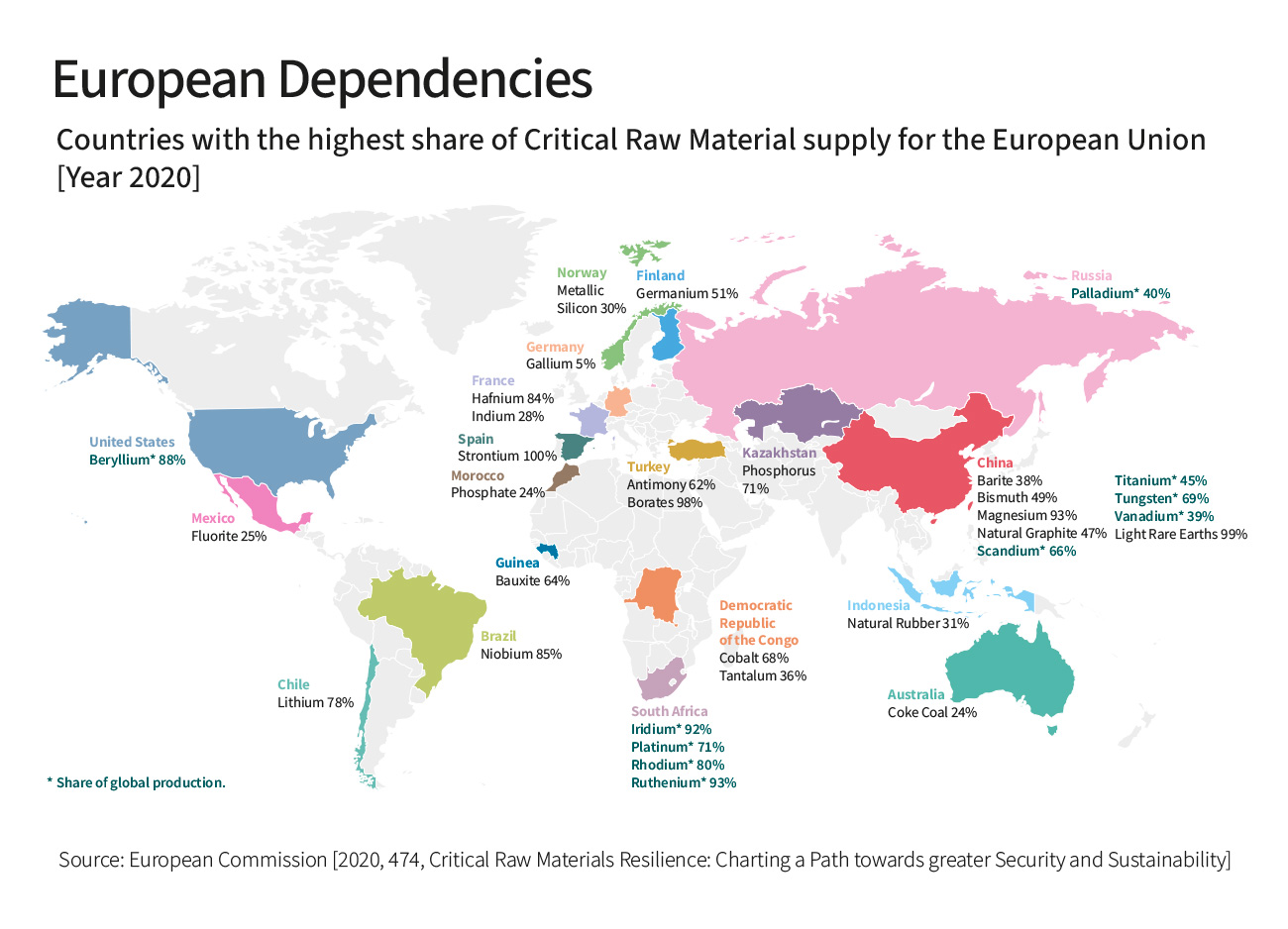
For industry insiders, the case of neodymium has become paradigmatic. This element is essential for producing permanent magnets found, for example, in smartphones, wind turbines, hybrid and electric vehicle motors, and computer hard drives. If an Italian company recovers it from WEEE, it will have to export it for processing, and the component containing it will then need to be purchased—almost always from non-European companies.
Creating an industrial demand for the recovered materials is an urgent issue that our country must address in coordination with other European nations. Meanwhile, without value chain agreements, long-term contracts, technical standards, and manufacturing outlets, secondary raw materials continue to be an accounted-for resource but remain unexploited.
The barriers identified by the European FutuRaM project accurately reflect the Italian situation: recycling infrastructure is lacking for emerging flows such as lithium-ion batteries, electric vehicles, NdFeB (Neodymium-Iron-Boron) magnets, and photovoltaic panels; there are no adequate specific recovery targets or end-of-waste criteria; and materials present at low concentrations exhibit weaker recoverability if they are not concentrated in separable components.
This highlights the importance of ensuring traceability and data availability, including through digital product passports, the Battery Passport, and interoperable reporting systems — essential tools to prevent critical raw materials from remaining invisible within complex products.
An invisibility we can no longer afford, given the dual urgency of safeguarding our country’s strategic autonomy and addressing the imbalances caused by the overexploitation of natural resources.
© All Rights Reserved
Download the full FutuRaM Special as a PDF


%20supply%20chain%20and%20the%20valuable%20materials%20it%20contains)